


Sex Academy
Water Based Lube Guide: What It Works With and How to Choose
What it is, what it works with, and how to pick a formula you will actually like.
Water based lube is the all-purpose choice for most people. It works with latex condoms and silicone toys, it rinses off with water, and it is easy to find in every consistency. Here is how to choose one, read the label, and use it well.
If you are standing in front of a wall of bottles, the label language can feel like a puzzle. This guide skips the comparison with silicone and oil (we cover that in our water-based vs silicone lube post) and focuses on one question: how do you choose a good water based lube and get the most out of it?
What Water Based Lube Is
A water based lube uses water as its main ingredient, thickened with other ingredients so it feels slick instead of runny. Because it is mostly water, it is the type most people reach for first. It is easy to wash off skin and most fabrics, it does not leave an oily film, and it is sold in everything from thin liquids to thick gels.
The trade-off is that water based formulas can absorb into the skin or dry out during a longer session. That is normal. Reapplying a little more lube, or adding a few drops of water to refresh what is already there, usually solves it.
You can browse the full range in our water based lubes collection, or see everything in the main lubes category.
What Water Based Lube Works With
Water based lube is the usual match for the products people use most often. The table below is a general guide. Brand formulas differ, so always check the product label and the manufacturer’s instructions for your specific item.
| Product or material | Water based lube |
|---|---|
| Latex condoms | Generally compatible |
| Polyurethane and polyisoprene condoms | Generally compatible |
| Silicone toys | Generally the recommended pairing |
| Glass, metal and hard plastic toys | Generally compatible |
| Oil-based products | Do not mix with latex condoms, because oils can weaken latex |
The Cleveland Clinic notes that oil-based products can break down latex, which is one reason water based lube is so widely recommended for condom use. If you are shopping for condoms as well, our condom collection sits right next to the lubes.
How to Read the Label
Most bottles tell you more than the front suggests. Turn it around and look for these things.
- Water listed first. This is the clearest sign you are looking at a water based formula.
- Condom and toy statements. Brands usually say whether the formula is made for use with condoms or toys. Take them at their word and follow the directions.
- Fragrance and flavor. Scented and flavored formulas can be fun, but some people find them irritating. If your skin is easily bothered, a plain, fragrance-free option is the safer starting point.
- Glycerin and warming or tingling additives. Some people tolerate these well and others do not. If you are unsure, start with a simple formula.
- Size and pump. A small bottle is a low-risk way to test a new formula before you commit to a larger one.
We are not able to tell you which ingredients are right for your body, and nobody can from a label alone. If you have a history of irritation, infections or allergies, ask a health care provider which ingredients to avoid.
How to Patch Test a New Lube
A quick patch test is a sensible habit with any new product, including water based lube. Put a small amount on the inner forearm, wait a while, and see whether you notice redness, itching or discomfort. If you do, skip that product. A patch test on your arm is not a guarantee for more sensitive skin, so stop using any lube that causes discomfort during use and talk to a health care provider if symptoms continue.
Thin, Gel or Jelly: Choosing a Consistency
Consistency changes how a lube feels more than most people expect.
- Thin liquids feel close to natural wetness, spread easily and rinse off fast. They may need more frequent reapplication.
- Gels stay where you put them. They are a popular all-purpose option, especially in a pump bottle you can use with one hand.
- Thick jellies feel cushioned and stay put the longest, which some people like for longer sessions or for anal use, where extra cushion and plenty of lube matter.
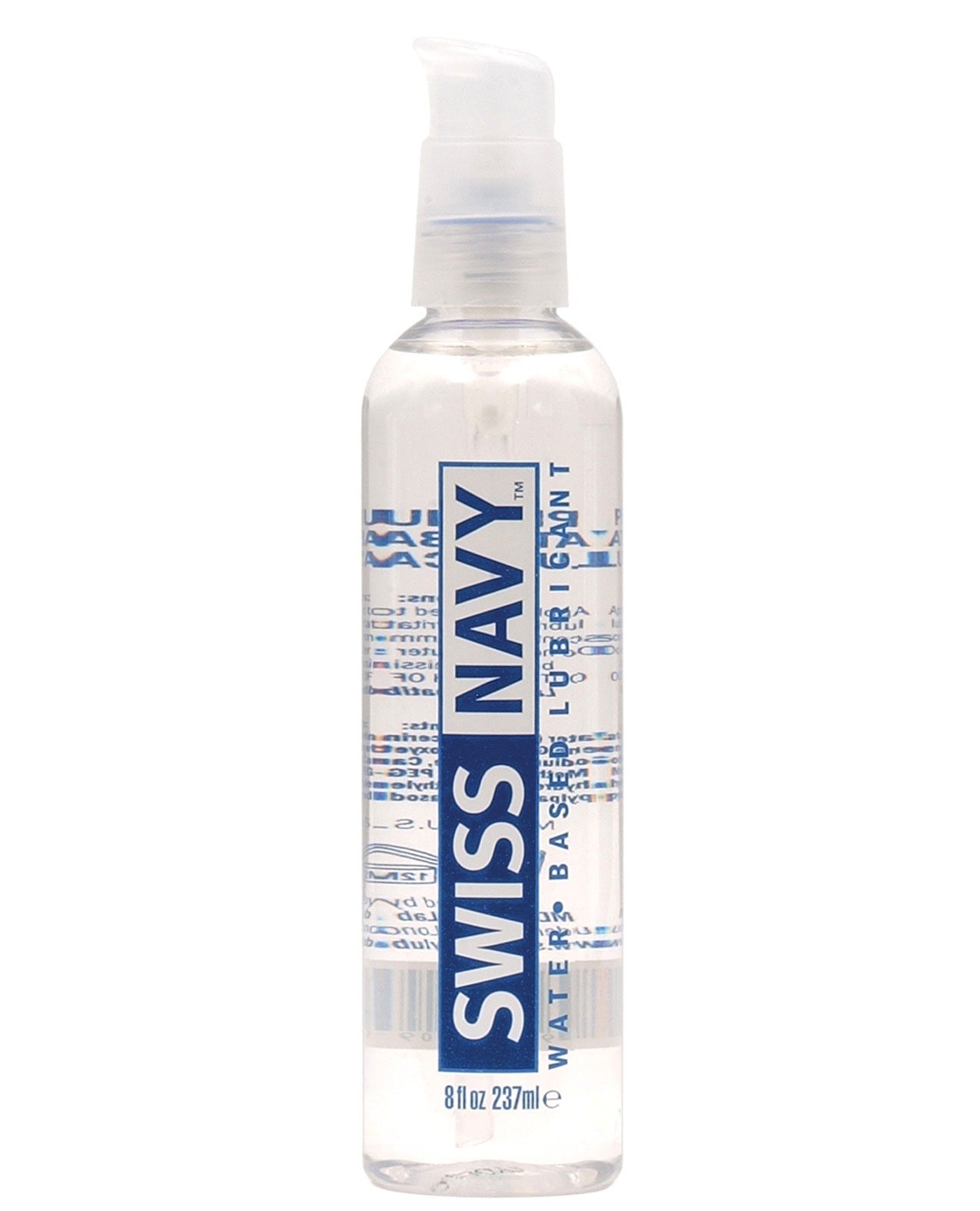
Our shelves include simple everyday formulas and more specialized ones. The Swiss Navy water based line comes in several bottle sizes, System JO has a jelly formula alongside its original, and Earthly Body offers a pump bottle. Prices and stock change, so check each product page for the current details.
How Much to Use and When to Reapply
There is no single right amount, but too little is the most common mistake. Start with a generous amount on the skin or the toy, add more if you feel any dryness or friction, and keep the bottle within reach. With a condom, a small amount inside the tip and more on the outside is a common approach. Water based lube dries out sooner than silicone, so reapplying is routine, not a sign that something is wrong.
If you use a silicone toy, stay with water based lube unless the toy maker says otherwise. Silicone lube can damage some silicone toys. Our post on cleaning and storing sex toys safely explains how to care for toys afterward.
Common Mistakes to Avoid
- Using too little, then pushing through discomfort. Stop and add more.
- Using an oil-based product, such as lotion or cooking oil, with latex condoms.
- Sharing an open bottle, which can spread bacteria. Use your own, or use a pump so the nozzle never touches skin.
- Buying a large bottle of a formula you have never tried.
- Ignoring the expiration date, or leaving the bottle in a hot car or a steamy bathroom.
See and Compare Lube in Person
Reading a label is one thing, and seeing bottle sizes, pumps and textures side by side is another. You can browse lubes without buying anything and ask the team for a plain-language rundown. Our North Dallas store carries lubes along with toys, lingerie and condoms, and the full list of our DFW stores is on our locations page. Online orders ship in plain, unmarked packaging.
Picks From Our Shelves
Here are four in-stock water based lubes in different sizes and consistencies. Check each product page for the current price and details.
Frequently Asked Questions
Is water based lube safe with condoms?
Generally, yes. Water based lube is widely recommended for use with latex condoms, while oil-based products can weaken latex. Always read the label and follow the manufacturer’s instructions.
Can I use water based lube with silicone toys?
In most cases, yes. Water based lube is the usual pairing for silicone toys, because silicone lube can damage some of them. Check the toy maker’s guidance for your specific product.
Why does water based lube dry out?
Water based formulas can absorb into the skin or evaporate during longer sessions. Reapply more lube, or add a few drops of water to refresh it.
How do I know if a lube will irritate my skin?
You can patch test a small amount on your inner forearm, but a patch test is not a guarantee. If any lube causes discomfort, stop using it and ask a health care provider if symptoms continue.
Which is better, water based or silicone lube?
It depends on how you plan to use it. Water based is the flexible everyday choice, and silicone lasts longer. Our water-based vs silicone lube guide compares them side by side.